
Spasticity treatment

A multidisciplinary approach to spasticity treatment
Spasticity treatment should be provided by a multidisciplinary team (specialists with different expertise) employing a shared-care approach.1,2 A variety of treatment options are available. Clinical experience has shown that this approach has many benefits. In most cases, a combination of various types of treatment is required to achieve the specific goals of treatment for a particular patient.3,4
A rehabilitation plan must be tailored to individual patient needs.1 It is likely to involve medical intervention, pain management, and multiple additional therapies, e.g., physical, occupational, and psychological approaches.1,5 Together, these therapies enable optimal management of functional problems such as impaired mobility, strength, balance, and endurance, amongst other spasticity-related issues.3,6,7
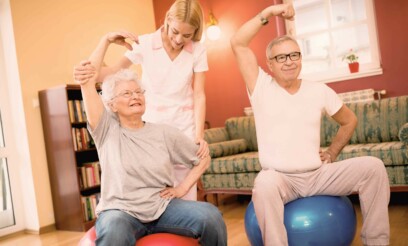
The primary aim of treatment is to help patients with spasticity and their carers improve their quality of life.8-10 Therefore, improvement is a key long-term factor in spasticity management.
The development of realistic and relevant goals for each individual is an essential key to successful treatment. These goals should be defined and followed up by all collaborating members of the spasticity management team.1,2
A spasticity management team may include the following healthcare professionals1,2:
- medical doctor who specialises in physical and rehabilitation medicine
- neurologist
- physiotherapist
- occupational therapist
- neurosurgeon
- orthotist (specialist concerned with the design, manufacture, and application of orthoses)
The importance of adapting the treatment to the patient’s symptoms and especially to their needs throughout the course of treatment is crucial. Expectations must be reviewed at regular intervals and redefined if necessary.2
Common goals of spasticity treatment
Relief of symptoms1,2,11
- Pain
- Muscle spasm frequency
- Involuntary movements
Improvement of active functions1,2,11
- Mobility
- Transfer
- Dexterity
- Self-care
- Eating and/or drinking
- Sexual activity
Avoiding progression of impairment2,8
- Prevention of contractures (shortening of the muscles, which reduces movement) to maintain the body’s natural structure
- Optimising posture and seating to improve tissue viability and protect the skin.
Decrease carer burden (passive functional improvement)1,2,11
- Ease of moving, handling, and positioning
- Routine day-to-day care
Aesthetic and posture
- Improving aesthetic and postural appearance to improve the body image1,2 and the fit of clothes
Enhancing impact of conventional rehabilitation intervention3
- Optimise effectiveness of therapies, reduce the use of systemic medication to treat spasticity


References
1Royal College of Physicians. Spasticity in adults: management using botulinum toxin. National Guidelines. 2018. Available at: https://archive-rcplondon.zedcloud.co.uk/file/12449/download%202018 [accessed September 2025].
2Reebye R, Balbert A, Bensmail D, Walker H, Wissel J, Deltombe T, Francisco GE. Module 2: Nonsurgical management of spasticity. J Int Soc Phys Rehabil Med. 2022:5(Suppl 1):S23-S27. doi: 10.4103/2349-7904.347808.
3Ashworth B. Preliminary trial of carisoprodol in multiple sclerosis. Practitioner. 1964 Apr:192:540-2.
4Gross R, Verduzco-Gutierrez M, Draulans N, Zimerman, M, Francisco G, Deltombe T. Module 3: Surgical management of spasticity. J Int Soc Phys Rehabil Med. 2022:5(Suppl 1):S38-S49. doi: 10.4103/2349-7904.347809.
5Thibaut A, Chatelle C, Ziegler E, Bruno MA, Laureys S, Gosseries O. Spasticity after stroke: physiology, assessment and treatment. Brain Inj. 2013;27(10):1093-105. doi: 10.3109/02699052.2013.804202.
6Suputtitada A, Chatromyen S, Chen CPC, Simpson DM. Best practice guidelines for the management of patients with post-stroke spasticity: a modified scoping review. Toxins (Basel). 2024 Feb 10;16(2):98. doi: 10.3390/toxins16020098.
7National Institute of Neurological Disorders and Stroke (NINDS). April 2020. Post-stroke rehabilitation. NIH Publication No. 20-NS-4846. National Institutes of Health. Available at: https://catalog.ninds.nih.gov/sites/default/files/publications/post-stroke-rehabilitation.pdf [accessed September 2025].
8Gold R, Oreja-Guevara C. Advances in the management of multiple sclerosis spasticity: multiple sclerosis spasticity guidelines. Expert Rev Neurother. 2013 Dec;13(12 Suppl):55-9. doi: 10.1586/14737175.2013.865880.
9Marciniak C, Munin MC, Brashear A, Rubin BS, Patel AT, Slawek J, Hanschmann A, Hiersemenzel R, Elovic EP. IncobotulinumtoxinA treatment in upper-limb poststroke spasticity in the open-label extension period of PURE: efficacy in passive function, caregiver burden, and quality of life. PM R. 2020 May;12(5):491-499. doi: 10.1002/pmrj.12265.
10Patel AT, Wein T, Bahroo LB, Wilczynski O, Rios CD, Murie-Fernández M. Perspective of an international online patient and caregiver community on the burden of spasticity and impact of botulinum neurotoxin therapy: survey study. JMIR Public Health Surveill. 2020 Dec 7;6(4):e17928. doi: 10.2196/17928.
11Jacinto J, Camões-Barbosa A, Carda S, Hoad D, Wissel J. A practical guide to botulinum neurotoxin treatment of shoulder spasticity 1: Anatomy, physiology, and goal setting. Front Neurol. 2022 Oct 17;13:1004629. doi: 10.3389/fneur.2022.1004629.